
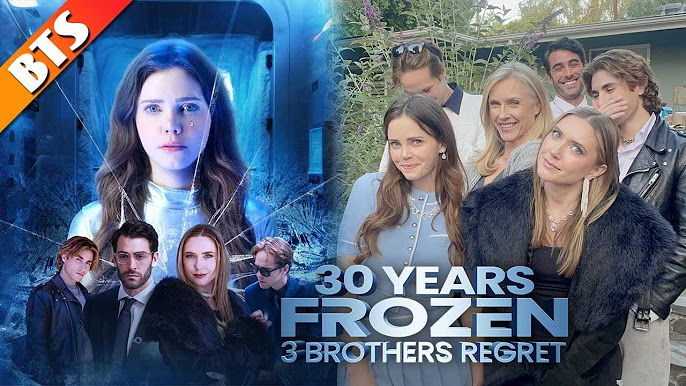
The 30 Years Frozen 3 Brothers Regret Cast centers on the Frozen Sister, her three brothers, a favored sister figure, and a tight set of supporting roles that either enable the family’s lies or force the truth into the open. If you are watching on ShortFlix, the quickest way to follow the story is to identify these core roles first, because most betrayals, reversals, and emotional payoffs come from how the performances collide.
What makes the cast discussion so intense is that the cryopreservation hook is not the main event. The main event is behavior: favoritism, gaslighting, scapegoating, and delayed accountability, all delivered through small choices, pauses, and expressions that feel uncomfortably familiar.

Cast at a Glance: The Roles That Actually Drive the Story
This series plays like a family drama with a sci-fi twist, so it helps to think in terms of roles before you think in names. The Frozen Sister is the narrative anchor, even when she is off-screen. Her presence is defined by what she endured and what she refuses to tolerate anymore. The performance has to carry two realities at once: someone who once tried to earn basic fairness, and someone who finally stops negotiating for dignity.
Then come the three brothers, who split viewers into camps because each one represents a different kind of harm. One brother speaks in “family image” language, managing optics and controlling the room. One brother shows guilt early, but fails to act when it matters, turning remorse into passive complicity. One brother hunts for truth and timelines, but can slip into using truth as power rather than repair. The cast works because these three energies do not just clash; they trap each other in a loop of denial, avoidance, and late realization.
The favored sister figure is the catalyst who benefits from the family’s bias and knows how to steer it. When played with subtlety, she is not a cartoon villain. She is a social operator who thrives on plausible deniability. Finally, the supporting cast, authority figures tied to the project, witnesses, allies, and pressure points, provides evidence and contrast, showing what normal empathy looks like outside the family system.
Reveal 1: The Frozen Sister Hits Hardest Through Restraint, Not Meltdown
Most viewers expect a wronged protagonist to explode: shouting matches, dramatic revenge, public exposure. This series often lands harder by doing the opposite. The Frozen Sister’s most powerful scenes come when she stops trying to convince anyone. That shift is not louder volume. It is colder clarity. The performance sells the moment she realizes that being correct does not guarantee being believed.
A strong portrayal usually moves through three phases. Early on, she is reactive and still hopeful in small ways, pushing back, explaining, trying again. In the middle, you see numbness settle in. She talks less because she has learned that words do not move power in her house. Later, after the time jump, her tone becomes precise, almost clinical. Some viewers read that as “too cold,” but it often plays as self protection. A person who has been dismissed for years will not keep pleading once they understand pleading is part of the trap.
Her scenes also change depending on which brother she faces. With the image driven brother, the conflict feels public, a fight over narrative and reputation. With the guilty brother, it feels private, a fight over silence and abandonment. With the truth seeking brother, it becomes intellectual, a fight over whether facts are used to heal or to dominate. If you want the clearest companion breakdown of how those confrontations pay off later, the ending discussion often helps: 30 Years Frozen 3 Brothers Regret Ending.
Reveal 2: Brother One Is Dangerous Because He Always Sounds Reasonable
Brother One is often the most hated, not because he is the loudest, but because he is the most convincing. He tends to speak in calm, adult sounding phrases: “don’t escalate,” “think of the family,” “wait until we are sure,” “this will ruin our name.” The performance hits when you realize those phrases are not wisdom, they are delay tactics. He is not asking what is true. He is asking what keeps the system stable.
This character’s harm is structural. In isolation, his choices can look like leadership. He tries to contain conflict. He reframes accusations as misunderstandings. He asks everyone to “cool down.” But the pattern tells the truth: containment repeatedly protects the wrong person. When evidence appears, he does not panic. He negotiates. He manages. He tries to control who speaks, when, and in what language. That is why viewers feel trapped watching him. He turns morality into public relations.
Acting wise, this role lives in micro decisions. A half smile that arrives too fast. A pause before acknowledging a fact. A flash of irritation when his authority is challenged. Those small signals communicate that his priority is control, even when his words claim love. The most effective performances make you understand him without excusing him. You can believe he thinks he is protecting the family, while also seeing how he protects the family from accountability.
Reveal 3: Brother Two’s Regret Is Not Redemption, and the Cast Makes You Feel That
Brother Two often earns the most sympathy because he looks uncomfortable earlier than the others. He hesitates. He avoids eye contact during humiliations. He seems to feel shame. Viewers want to crown him “the good brother.” The series pushes back with a painful truth: regret without action becomes another form of betrayal.
This is a hard role to play well, because it requires restraint. If the actor makes him too gentle, audiences forgive him too easily. If the actor makes him too harsh, audiences miss the point that passive complicity can be just as damaging as direct cruelty. The best version shows a person who knows better, then repeatedly chooses comfort. He does not cause harm for pleasure. He causes harm by taking the easiest path, again and again, until the easiest path becomes cruelty.
Look for omission based harm. He looks away when he should intervene. He stays quiet when a single sentence of support could change the room. He offers half apologies that request peace rather than accountability. Those choices are readable in posture, breath, and timing more than in dialogue. When the time jump forces consequences into view, Brother Two often tries to “make it right” through one big gesture. The cast reveal is that the actor makes that gesture feel too late on purpose, because accumulated trauma cannot be repaid in one scene.
Reveal 4: Brother Three Turns Truth Into Power, Depending on How It’s Performed
Brother Three usually carries the detective energy. He notices contradictions, questions timelines, and challenges the family’s default belief. In many stories, that would make him the hero. Here, the cast reveal is sharper: truth seeking can still be self serving, and “being right” can become a weapon.
A strong performance gives him a real need for certainty. He cannot tolerate ambiguity because ambiguity threatens his identity as the fair one. That is sympathetic, but it also explains his danger. He interrogates when compassion is needed. He demands confession when listening is needed. He treats pain like a case file, repeating the original dehumanization in a new language. When viewers say they are torn about him, it is usually because the actor makes both sides believable.
Watch what happens when he is proven wrong. Some portrayals lean into righteous anger, anger at being misled. Others lean into shame, shame at realizing he participated. The most effective blend both: he is furious at the lie, then realizes he also used the lie because it was convenient. In late confrontations, he can either use truth to open space for repair, or use truth to dominate the story and punish. That fork is why audience debates never end, and why this role is one of the most important in the 30 Years Frozen 3 Brothers Regret Cast.
Reveal 5: The Favored Sister Works Best When She Feels Plausible, Not Evil
The favored sister figure can collapse into a one note antagonist if played broadly. When played with finesse, she becomes the character viewers “hate” because she feels real. The key is plausible deniability. She rarely lies in a way that can be pinned down cleanly. She frames accusations as confusion. She shifts from confidence to vulnerability at the exact moment consequences approach. She chooses private spaces for provocation, then performs innocence in public.
A good performance makes her feel like she is reading each brother’s weakness. She knows who wants to be seen as protector. She knows who fears conflict. She knows who wants truth but also wants praise. By feeding each brother what he needs emotionally, she strengthens the family’s bias without needing constant overt action. That is why her scenes can feel chilling even when she is “doing nothing.” The manipulation sits in timing, tone, and the way she makes herself look fragile.
When the story finally corners her, the strongest portrayals do not turn her into someone suddenly stupid. They show her losing control. There is a difference. Losing intelligence feels like cheap plotting. Losing control feels like consequence. That distinction is one reason the series can be satisfying and infuriating at once, and it is why cast discussions focus on her scenes as much as on the time jump.
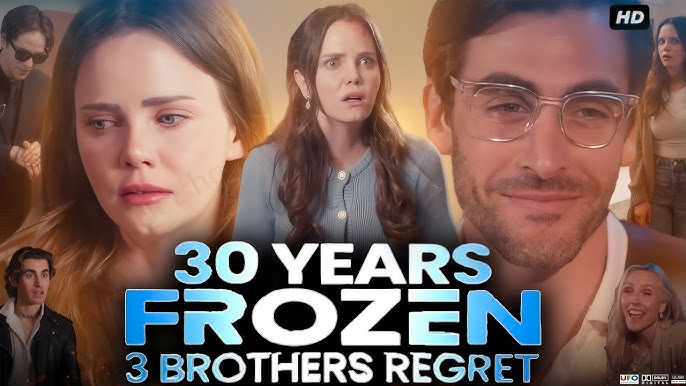
Reveal 6: Authority Figures Make the Cryopreservation Premise Feel Like a System, Not a Trick
Many short dramas treat authority figures as thin plot tools. Here, when those roles are performed well, they add a second layer: systems protect themselves. The scientist, project lead, or institutional representative often speaks in the language of ethics, procedure, and opportunity. Yet their choices prioritize outcomes over people, which echoes the family’s own moral failure in a larger form.
The acting sweet spot is uncomfortable professionalism. Too cold and the show turns melodramatic. Too warm and it risks excusing exploitation. The best performances stay polite, competent, and morally evasive. They can acknowledge suffering while still moving forward, which is exactly how real institutions behave when a person becomes a “case.”
Pay attention to how these characters refer to the Frozen Sister. Do they use her name, or do they use labels that reduce her to a role in a project? That choice changes the tone of the cryopreservation storyline. It stops being magic and becomes commodification. It also clarifies why the family’s behavior is not only personal. It is reinforced by a world that rewards control, reputation, and convenient narratives.
When cast discussions ignore these roles, they miss why the series feels bigger than a household argument. Authority figures turn private harm into public consequence, making the finale feel inevitable rather than random.
Reveal 7: Supporting Cast Members Carry the Evidence, and That Shapes the Emotional Payoff
A surprising amount of the story’s turning points are carried by small supporting roles: witnesses, friends, mentors, doctors, neighbors, staff members, anyone outside the family’s bubble who can see the pattern. They often appear briefly, then return later with a detail that breaks the family’s preferred story. That is why people search cast lists by face, not by name.
The most effective supporting performances are “ordinary.” They do not need speeches. They just react like a normal person who believes what they see. That normality becomes a mirror that makes the family’s denial look even uglier. In other words, supporting roles provide moral contrast. They show what empathy looks like when it is not filtered through favoritism.
It helps to group these roles by function. Evidence carriers bring records, timelines, or testimony. Emotional anchors treat the Frozen Sister as credible, which is radical inside her home. Pressure points force the conflict into the open, turning whispers into consequences. When these roles are played convincingly, the ending feels earned because the truth emerges from seeds planted earlier, not from sudden convenience.
If you plan to rewatch, track the small moments: a glance that signals doubt, a line that reveals a pattern, a prop that returns later. The supporting cast is where the series hides its most honest clues.
Reveal 8: How to Identify the Cast Cleanly While You Watch
Because short dramas are often reuploaded, clipped, or circulated without full credits, cast confusion is common. The cleanest way to identify the cast is to match roles to signature scenes first, then confirm names where credits are most complete. This protects you from the most common mistake: copying a fan list that mixes up actor names and character labels.
Start by labeling the Frozen Sister and each brother by behavior. The image driven brother manages perception and speaks for the family. The guilty brother avoids confrontation and fails through silence. The truth seeking brother asks questions and pushes timelines. Once you can identify these patterns, you can anchor faces to roles even if names vary between uploads.
Next, check the episodes where credits tend to be fuller. In many productions, the final episode or a compilation cut is more likely to include clear credit text. If you see inconsistent spellings, pick one version and stick to it across your own notes, because consistency matters for understanding relationships and tracking arcs.
Finally, be careful with “familiar face” assumptions. Actors in vertical dramas often appear across multiple projects, so your memory can be correct about the face and wrong about the title. When you search, pair the actor name with the series title instead of searching the name alone. That reduces false matches and helps you build an accurate cast map that matches what you actually watched.
FAQ
1) Who are the core roles in 30 Years Frozen 3 Brothers Regret Cast?
The Frozen Sister, her three brothers, a favored sister figure, plus key allies, witnesses, and authority figures tied to the cryopreservation project.
2) Why does the Frozen Sister feel central even when she is absent?
Because the story is about delayed consequences, and her absence becomes the clearest proof of what the family refused to change.
3) Are the three brothers villains or flawed people?
They are flawed people whose repeated choices create harm, with each brother embodying a different kind of complicity.
4) Why is the favored sister role so divisive?
When played subtly, she feels plausible, which triggers stronger reactions than a one note antagonist.
5) Do supporting characters matter as much as main characters?
Yes, because they often carry evidence, provide moral contrast, and push the truth into the open.
6) What makes Brother One so frustrating to watch?
He often sounds reasonable while using calm language to delay accountability and protect the family’s image.
7) Why doesn’t Brother Two’s guilt satisfy viewers?
Because remorse without action does not repair years of neglect, silence, and scapegoating.
8) Why do viewers argue about Brother Three the most?
Because truth seeking can be either healing or controlling, and his arc depends on how he uses facts.
9) Why do cast lists sometimes conflict across uploads?
Clipped versions may omit full credits, and reposts can change labels or spellings, causing mismatches.
10) What should I pay attention to on a rewatch?
Small pauses, repeated patterns of disbelief, and the supporting characters who quietly hold the evidence.
The 30 Years Frozen 3 Brothers Regret Cast is the reason the series hits harder than its cryopreservation premise suggests. The performances turn familiar tropes, favoritism, gaslighting, denial, regret, into something that feels personal, because the most damaging moments are often quiet and “reasonable” on the surface. If you are watching on ShortFlix, the best way to deepen the experience is to track how each brother’s style of harm differs, and how the Frozen Sister’s restraint evolves into clarity.
To revisit the story’s full arc and see how each role lands once the time jump reframes everything, return to 30 Years Frozen 3 Brothers Regret and ask yourself one question: which performance unsettled you the most, and was it because it felt exaggerated, or because it felt real.
