

30 Years Frozen 3 Brothers Regret Ending runs for 50 episodes, and its finale lands as “brutal” because it turns a long-awaited reckoning into consequences nobody can undo. If you are tracking the series on ShortFlix, the fastest takeaway is simple: the ending is not built to comfort you, it is built to force accountability.
This short drama sells a high concept hook, a 30 year cryopreservation disappearance, but it wins attention through emotional pressure. Three brothers, a sister they failed, and a family myth they protected for too long collide in the final stretch. The result is a finale that makes many viewers angry, not because it is confusing, but because it is consistent.
Plot Setup: Cryopreservation, Abuse, and the One Choice That Breaks the Family
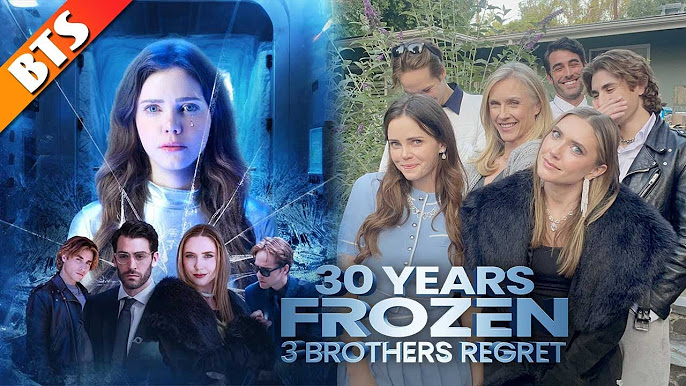
At its core, the series is a story about a family system that mistakes control for love. The younger sister lives inside neglect, false accusations, and a hierarchy where her pain never counts as evidence. The brothers are not written as strangers who happen to share a house. They are written as gatekeepers of reality, deciding what is “true” based on convenience, not observation.
The cryopreservation experiment is the narrative lever that exposes everything the family refused to face. It is an escape route that also functions like a mirror. The moment she volunteers, the story stops being about daily cruelty and becomes about delayed consequences. Thirty years is not just a time skip. It is a moral gap the brothers cannot cross with apologies.
A key reason the plot hits so hard is its use of repetition. Birthday disappointments, public humiliations, forced sacrifices, and the “you are overreacting” pattern of gaslighting show up again and again. Each repetition trains the viewer to understand the sister’s decision as inevitable, not impulsive. By the time the experiment becomes real, the audience already knows the family will interpret her disappearance in the worst possible way.
That is also why the ending feels pre loaded. The finale does not introduce a new theme. It cashes the checks written from episode one: favoritism has a price, denial has a cost, and regret is never a substitute for repair.
30 Years Frozen 3 Brothers Regret Ending Explained: The Emotional Logic Behind the Finale
The simplest way to understand the finale is to treat it as a chain of moral tradeoffs rather than a single twist. The brothers do not “lose” because someone outsmarts them. They lose because each of them protects something different: reputation, control, or the fantasy that the past can be edited. The ending punishes that protection instinct by forcing them to choose between truth and comfort when comfort has already destroyed trust.
The final act also reframes earlier beats as warning signs. Small moments that looked like family drama become proof of a system: selective listening, scapegoating, and the habit of rewarding the loudest voice. That is why the late revelations do not feel random. They feel like the natural end state of a household where power decides reality.
If you want a quicker handle on who is who and why certain confrontations land so sharply, the cast context helps, especially when reposted versions use inconsistent credits. A helpful internal reference is 30 years frozen 3 brothers regret cast, since it clarifies character identity and reduces confusion when viewers discuss the finale by brother rather than by name.
What fans call “the worst ending” is often the moment the show refuses an easy redemption arc. The brothers can feel remorse and still be guilty. They can want forgiveness and still deserve distance. That is the emotional logic the finale commits to, and it is the reason the ending is memorable even for people who hate it.
The 5 Brutal Twists Fans Hate and Why They Hurt
This series creates outrage by taking familiar short drama tropes and refusing to soften their consequences. The twists are not shocking because they are unrealistic. They are shocking because they map cleanly onto how abusive family dynamics actually operate.
Twist 1: The “Rescue” Narrative Was Always Self Serving
Near the end, earlier “protective” choices are reframed as positioning. Who gets to speak for the family. Who controls the investigation. Who decides what the sister “really meant.” The twist hurts because it turns hero language into power language. Fans hate it because it makes kindness feel transactional.
Twist 2: The Truth Arrives After the Damage Is Done
The finale finally stabilizes the facts behind the cryopreservation decision and the lies that surrounded it. But the brothers have already crossed lines: public accusations, emotional exile, and irreversible betrayals. Viewers want truth to fix things. The show uses truth to expose that some things cannot be fixed.
Twist 3: One Brother Chooses Control Over Repair
The most infuriating twist is not a villain reveal. It is a family member doubling down. Instead of accepting accountability, he tries to manage perception. That choice turns remorse into performance, and the audience can feel the manipulation.
Twist 4: Sacrifice Is Framed as Necessity, Not Victory
A final sacrifice lands less like triumph and more like moral payment. The show denies the audience a clean “win” beat. That is why it feels cruel. It treats survival as expensive.
Twist 5: The Family Does Not End Together
The finale refuses a tidy reunion. Separation becomes the final shape of the story, whether physical, emotional, or moral. Fans hate it because the premise promises reunion. The ending replies that reunion is possible, but wholeness is not guaranteed.
The Three Brothers: Why Each One Fails in a Different Way
The show works because the brothers are not interchangeable. Each one represents a different failure mode, and the ending forces those failure modes into collision. That is also why viewer debate is so intense: fans often identify with one brother’s logic, then feel attacked when the finale exposes its costs.
One brother embodies rationalization. He can justify nearly anything if it protects the family’s public image or internal stability. In the middle episodes, this looks like leadership. In the final episodes, it looks like moral avoidance. He does not ask “What is true?” He asks “What will keep the system intact?”
Another brother embodies guilt, but guilt alone is not growth. He feels remorse earlier than the others, yet he repeatedly chooses the path of least resistance. His tragedy is that he recognizes the harm but still participates because conflict feels scarier than accountability. The finale treats that as complicity, not innocence.
The third brother embodies truth seeking, but truth seeking can also become obsession. He is more willing to question the family myth, yet he can still weaponize truth when he wants control. The ending shows that being “right” is not the same as being safe to love.
Taken together, the brothers form a closed loop: rationalization protects the lie, guilt sustains the lie, and truth arrives too late to stop the lie from harming someone. That loop is what the cryopreservation event breaks, and it is why the ending feels like a moral reckoning rather than a plot trick.
Selene, Stella, and the “Real Sister” Lie: How Misbelief Drives the Worst Decisions
Much of the audience rage comes from one repeating pattern: the brothers treat accusation as evidence when it benefits the favored sister, and treat evidence as “excuses” when it benefits the scapegoated sister. That pattern is the real antagonist. The show uses it to explain why the younger sister’s disappearance is not a sudden twist. It is a rational response to an irrational environment.
The “real sister” framing is especially corrosive because it turns love into a scarcity game. The brothers behave as if loyalty must be proven through punishment. When the favored sister claims harm, the brothers respond instantly. When the younger sister claims harm, the brothers demand perfect proof. Over time, the difference becomes the message: your pain is not real unless it serves us.
The finale builds on earlier beats like mistaken blame, public humiliation, and escalating punishments. Episodes that involve injuries, forced apologies, and memory destruction matter because they show how the family rewrites history in real time. Even when the brothers begin to suspect the truth, they struggle to admit it because admission would indict their own identity as “good brothers.”
That is why the ending is so bitter. The show is not merely saying the favored sister lied. It is saying the brothers wanted the lie because it protected their self image. In that light, regret is not a sudden feeling at the end. It is the delayed recognition that they invested in the wrong story for too long.
Symbols and Motifs: The Freeze as Trauma, Memory, and Control

The cryopreservation premise functions as metaphor in at least three layers. First, it represents trauma suspension. The younger sister “freezes” not because she forgets, but because she stops participating in a system that refuses to see her. The brothers experience that freeze as abandonment, which exposes their entitlement. They wanted her presence, not her wellbeing.
Second, the freeze represents delayed accountability. Thirty years is long enough for the brothers to build careers, reputations, and new narratives, yet the story insists that moral debt survives time. This is why the finale does not feel like a revenge fantasy. It feels like a ledger coming due.
Third, the freeze represents control and silence. The brothers are used to controlling the family story. When the sister disappears, control becomes impossible because the missing person cannot be managed. This forces a shift from management to mourning, and many characters are emotionally unprepared for mourning without control.
The show reinforces these themes through recurring objects: keepsakes, boxes, photos, locked rooms, and public ceremonies that rename things without consent. Those motifs all orbit one question: who owns the story of a life? The ending answers that nobody owns it, but some people try, and that attempt is a form of violence.
Watching the finale after noticing the motifs changes the experience. The ending feels less like a shock and more like a completion of the metaphor: you cannot freeze consequences, and you cannot “manage” your way out of guilt.
Why the Ending Divides Viewers: Closure vs Accountability
The loudest fan complaints often reveal an expectation mismatch. Many viewers come to short dramas wanting closure: a clear villain, a public vindication, and a satisfying punishment. This ending prioritizes accountability, which is messier. Accountability includes consequences for people who feel remorse. It includes incomplete reconciliation. It includes separation as a valid outcome.
That difference is why some viewers call the ending “boring” while others call it “realistic.” The finale avoids a flashy last minute reversal and instead commits to emotional realism. The brothers are not rewarded for realizing the truth late. They are not rewarded for loving the sister after losing her. The story treats remorse as a beginning, not a payment.
This is also where platform expectations matter. On ShortFlix, many viewers binge fast and judge endings by emotional payoff per minute. This finale slows down at the worst moment, because it wants the audience to sit with consequence rather than sprint into catharsis. That pacing choice amplifies hatred.
If you evaluate the ending as a moral thesis, it holds together. If you evaluate it as a fantasy of justice, it frustrates. The show chooses the thesis: love does not erase harm, and regret does not undo years of cruelty. That decision is exactly why the ending trends in discussions, even among people who wish it did not.
Rewatch Guide: Clues You Missed and Episode Beats That Reframe Everything
A rewatch often flips viewers from anger to grim appreciation, because the series seeds its finale early. The first shift you notice is how often the brothers ask the wrong question. They ask “Did she do it?” more than “Why would she do it?” They ask “Who started this?” more than “Who benefits from this story?” Those questions set up the ending’s moral reveal: the family’s reflex is judgment, not care.
Pay attention to scenes where evidence is available but ignored. The show repeatedly places proof within reach: a witness, a timeline detail, a physical clue, a pattern in the favored sister’s behavior. The brothers look away because looking would force action. This becomes crucial in the final episodes when they realize the truth and still cannot repair what they broke.
Another rewatch focus is how the series uses public events. Launch ceremonies, celebratory banquets, and family announcements are staged as “honor,” yet they often erase consent. The finale’s emotional core is that the sister was used as a symbol while being treated as disposable. Once you track those public moments, the ending reads as the consequence of symbolic love replacing real love.
Finally, listen to how characters talk about “family.” In early episodes it is used as a weapon: obey because family. In late episodes it becomes a question: what is family if it requires someone to disappear to be taken seriously? That question is the ending’s true cliffhanger, because it cannot be solved by one apology.
FAQ
1) How many episodes does 30 Years Frozen, 3 Brothers Regret have?
It has 50 episodes.
2) Is the ending sad or just shocking?
It is both, with shock driven by late truth and sadness driven by irreversible consequences.
3) Why do fans hate the ending so much?
Because it refuses a clean reunion and treats remorse as insufficient without repair.
4) Does the finale explain what really happened to the sister?
Yes, it clarifies the key truths, but it does not pretend truth can undo harm.
5) Is there a single main villain?
There are antagonistic characters, but the story frames family denial and scapegoating as the real engine of harm.
6) Do the brothers redeem themselves by the end?
They move toward accountability, but the ending avoids a full redemption victory lap.
7) Is the favored sister exposed publicly?
The series leans more toward consequence than spectacle, so exposure is not framed as a satisfying “gotcha.”
8) Does the cryopreservation concept stay important after the midpoint?
Yes, it remains the central metaphor for delayed accountability and frozen communication.
9) Is it worth watching if I already know the ending is divisive?
If you like character driven drama and moral fallout, it is worth it even if you dislike the finale.
10) What should I watch for on rewatch?
Moments where evidence is ignored, public ceremonies replace real care, and “family” is used as control language.
30 Years Frozen 3 Brothers Regret Ending is hated by many fans because it denies the comfort they came for. It does not give a clean revenge fantasy. It does not deliver a neat reconciliation. Instead, it treats harm as something that creates permanent shape in relationships. That approach is harsh, but it is also coherent: the show spends 50 episodes demonstrating a system of favoritism, gaslighting, and punishment, then refuses to pretend a last minute realization can wash it away.
If you want the ending to feel “better,” the best angle is to read it as a warning story, not a payoff story. The warning is that love without respect becomes ownership, and ownership turns into cruelty while still calling itself family.
For a direct revisit of the title itself, check 30 Years Frozen, 3 Brothers Regret and judge the finale by one standard: after 30 years of frozen time, the most brutal twist is not what happened to her, it is what the brothers discover about themselves.
