
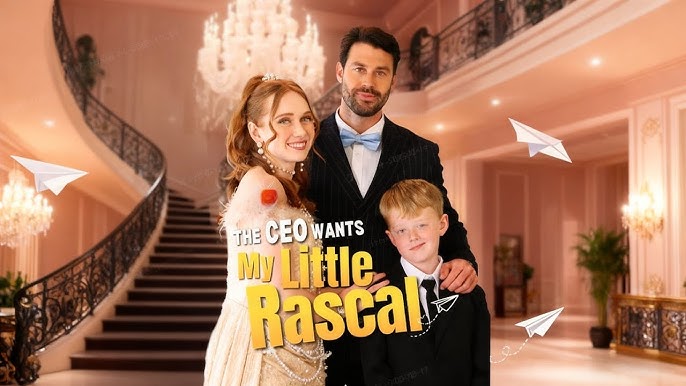
The CEO Wants My Little Rascal Cast is led by Jarred Harper, Emily Gateley, Ashlin Teague, and Thomas Garner, the four faces powering the romance, family chaos, and cliffhanger reveals. If you are tracking the series on ShortFlix, these are the names to know first because every major twist and emotional payoff routes through their characters.
CEO Wants My Little Rascal Cast: The 4 Stunning Leads You Need To Know

When viewers search CEO Wants My Little Rascal Cast, they usually want the core names fast, then a clear map of who plays whom. This story moves at vertical drama speed, so the lead actors have to communicate status, attraction, suspicion, and vulnerability in seconds. That is why the four leads feel so “big” even in short episodes: the script relies on their faces and reactions more than long dialogue.
Jarred Harper as Ethan Landreth
Ethan is the CEO archetype done the addictive way: controlled, high status, and emotionally locked until the plot forces him into fatherhood level consequences. Harper sells Ethan’s authority with stillness and clean decision making, which makes the softer moments land harder when he finally cracks.
Emily Gateley as Cecilia Thompson (also credited as Jill Frost)
Gateley anchors the “little rascal” energy. She plays the heroine with a mix of resilience and sharp instincts, so she never reads as helpless even when the family pressure escalates. The dual credit is also a clue that identity and naming matter in this title’s conflict web.
Ashlin Teague as Julia Frost
Julia is the tension engine. Whether she is framed as rival, gatekeeper, or the one who knows too much, Teague’s presence keeps the story from turning into simple romance. She brings bite and momentum to every confrontation beat.
Thomas Garner as John Landreth
John functions as the family pressure valve. In CEO dramas, a Landreth name implies legacy, inheritance, and reputation management. Garner plays that seriousness in a way that raises stakes without needing constant exposition.
Relationship Map: Who’s Connected To Who and Why It Hooks So Fast

This title’s hook is not only “CEO plus romance.” It is the way relationships create leverage. You have a one night stand history, a child shaped secret, corporate reputation risk, and a family system that treats love like a liability. That is why cast searches spike: viewers feel like one missed scene can change who is “good,” who is “dangerous,” and who is lying.
Start with the central axis: Ethan Landreth and Cecilia Thompson. Their chemistry is written to oscillate between warmth and threat, because every tender beat is shadowed by a practical question: will the CEO accept the truth, and what will acceptance cost him publicly.
Then add the Frost side of the board. Julia Frost is not just “another woman.” She represents control, social optics, and the kind of family alignment that can crush a single mom storyline in one meeting. The writing uses her to force the heroine into decisive, strategic choices.
The Landreth family angle is where John Landreth matters. Even if Ethan is powerful, legacy characters can still corner him. In short drama language, family elders and siblings often carry the real power because they control money flows, narrative framing, and access.
If you also like cast deep dives with fast facts, see sam myerson age, sam myerson height, and sam myerson wife as quick internal jumps before you come back here for the full character web.
The 4 Lead Performances That Make the Classic Tropes Feel Fresh
The plot ingredients are familiar on purpose: billionaire CEO, secret baby, office romance, family interference, public scandal, and forced proximity. What makes CEO Wants My Little Rascal bingeable is that the leads perform these tropes with speed and clarity. In vertical drama, you do not get time to “grow into” a character over ten episodes of slow build. The actor has to land a character thesis in the first scene.
Jarred Harper’s CEO performance works because he plays authority as a default setting, not a costume. He does not need to shout to feel powerful. That makes the moments where he loses control, especially around paternity and workplace accusations, feel like real consequences instead of scripted noise.
Emily Gateley’s heroine performance works because she moves like someone who has already done the hardest part: surviving. The show frames her as reactive, but she is never passive. Even when she is cornered by corporate policy or family threats, she reads as a decision maker. That is crucial for a “little rascal” title, because the audience expects cleverness, not just tears.
Ashlin Teague gives the story its sharper edge. A rival character can easily become one note. Teague avoids that by playing Julia as someone with an agenda and a pulse. You can sense motive without needing a monologue.
Thomas Garner adds structural gravity. He makes the Landreth name feel like a system, not a single person, which is essential for keeping stakes high beyond romance.
Supporting Cast and Why the World Feels Bigger Than a Simple Romance
The best short dramas do not feel empty. Even when scenes are compressed, the world feels populated by people who can escalate consequences quickly: family members, corporate staff, allies, enemies, and “truth keepers.” That is where the supporting cast matters. They give the leads something to collide with, not just each other.
Theo Thompson is a good example of a supporting role that adds movement. In stories like this, a Theo type character often functions as the bridge between the heroine’s private reality and the CEO’s corporate world. He can be the one who notices patterns, delivers information, or triggers a confrontation that would otherwise take ten episodes in a longer series.
The Frost family presence matters too. Linda Frost and Thomas Frost type characters (whether framed as parents, guardians, or family power holders) help explain why Julia’s actions carry weight. A rival is more threatening when she has a machine behind her, and the Frost side often plays like a machine built for reputation protection.
On the Landreth side, supporting figures typically exist to enforce “family policy” on Ethan. Even when Ethan wants to act like the sole decision maker, legacy structures can pressure him into cold choices: deny, delay, discredit, or negotiate.
In short, the supporting cast is not decoration. They are accelerators. They tighten the noose around the leads so each episode has a reason to end on a cliffhanger.
What To Watch For: Visual Chemistry, Power Blocking, and Micro Acting
If you are trying to understand why the cast “steals the show,” look at craft, not only plot. Vertical dramas are engineered for mobile viewing. The camera lives close to faces, and the acting style has to be micro precise. A single pause can do the work of a full scene.
Watch how the show stages power. In boardroom or office scenes, the CEO character is often placed slightly forward in the frame, given cleaner lighting, and shot from a subtly lower angle. That is not accidental. It makes Ethan feel dominant even before he speaks. When the heroine is “winning,” the blocking flips. She gets cleaner framing, longer eye contact, and fewer cutaways, signaling control.
Notice how the leads handle silence. In these episodes, silence is not downtime. It is a weapon. Jarred Harper often uses stillness to imply restraint. Emily Gateley often uses silence to imply calculation, not fear. When those silences collide, you get chemistry that feels like conflict, not cute flirting.
Also watch wardrobe as storytelling. The CEO suit silhouette, the heroine’s practical styling, and Julia’s sharper presentation are all part of character coding. The show is telling you who is “safe” and who is “dangerous” before dialogue confirms it.
Once you start watching for these cues, you will see why cast questions stay hot. Viewers are reacting to performance language that feels intense even when the script is simple.
Episode Pacing: How the Cast Keeps Every Twist Feeling “Explosive”
Vertical drama pacing has one job: keep you tapping Next. That means each episode must contain at least one escalation beat: a reveal, a threat, a misunderstanding, a reversal, or a physical consequence. This title leans into a paternity centered escalation ladder: accusation, denial, evidence, counter evidence, family interference, public fallout, then emotional collapse.
The cast carries that ladder by playing each twist with slightly different emotional temperature. Ethan’s reactions tend to start controlled, then become protective, then turn ruthless when reputation is threatened. Cecilia’s reactions tend to start defensive, then become strategic, then turn openly assertive when her child is placed at risk. Julia’s role often shifts between social control and open confrontation, which keeps the love triangle pressure alive even when the show is more family drama than pure romance.
A key reason this works is consistency. In short dramas, inconsistency kills believability fast. The actors must keep a stable core while the plot whips around them. The show’s leads do that by keeping their “base emotion” consistent: Ethan’s pride, Cecilia’s resilience, Julia’s agenda, John’s legacy pressure. Plot twists then feel like stress tests, not random changes.
Where To Track Cast Credits and Updates Without Getting Misled
Cast confusion is common in short drama ecosystems because clips circulate outside official episode order and repost pages often mix names, characters, and even series titles. If you want the cleanest tracking, use platforms that display credits consistently, then cross check character names against what you see in the episodes.
This is where ShortFlix becomes useful as a viewing and tracking touchpoint, especially if you are trying to match actor names to character names while you watch. The most reliable habit is simple: when you learn a character name in dialogue, write it down, then match it to the cast list rather than trusting a random clip caption.
Also be careful with “lead” labels. Fan edits sometimes label the most viral face as the main lead, even if the story structure is shared across multiple characters. This title is a good example. It has four clear lead functions, and the story needs all four to keep tension moving: the CEO, the heroine, the rival pressure, and the family power lever.
Finally, treat personal detail claims with caution. Height, age, spouse, and dating rumors spread faster than credits. If your goal is a cast guide that stays evergreen, focus on roles, character function, and verified credit listings rather than gossip.
FAQ
1) Who are the main leads in CEO Wants My Little Rascal Cast
Jarred Harper, Emily Gateley, Ashlin Teague, and Thomas Garner are the four most visible leads driving the plot.
2) Who plays the CEO in CEO Wants My Little Rascal
Jarred Harper plays Ethan Landreth.
3) Who plays the female lead
Emily Gateley plays Cecilia Thompson, and she is also credited as Jill Frost.
4) Who plays Julia Frost
Ashlin Teague plays Julia Frost.
5) Who plays John Landreth
Thomas Garner plays John Landreth.
6) Is this a romance only series
It is romance plus family drama, with strong corporate and reputation stakes.
7) Why is the cast list confusing on social media
Reposts, edits, and mixed captions often swap character names or attach the wrong series title.
8) Is there a love triangle element
Yes, the narrative frequently uses rival pressure and relationship leverage to raise stakes.
9) How do I identify supporting characters faster
Listen for surnames like Landreth and Frost in dialogue, then match them to the credit list.
10) What makes this cast stand out in a short drama format
Micro acting, strong chemistry, and clear power coding that stays consistent across cliffhangers.
Conclusion
If you came here for a quick answer, the CEO Wants My Little Rascal Cast is anchored by Jarred Harper, Emily Gateley, Ashlin Teague, and Thomas Garner, and the story’s biggest moments depend on how well they sell status, threat, and chemistry in tight vertical scenes. What makes the cast feel addictive is not only looks or trope familiarity. It is performance efficiency: the ability to deliver a full emotional beat in a glance, then move the plot forward instantly.
If you want a clean reference point to revisit the title and recheck the credits as you watch, go back to CEO Wants My Little Rascal. It is the fastest way to confirm who is who, then enjoy the drama without getting dragged into clip caption misinformation.
